Toothache can be hard to ignore. Let’s find the cause, ease the pain and get you back on track.
Toothache can be hard to ignore. Let’s find the cause, ease the pain and get you back on track.



Root canal treatment can sound daunting, but it doesn’t have to be. Using modern techniques, a calm approach and plenty of reassurance along the way, we can help relieve the discomfort, treat the infection and preserve your tooth.
Because saving your natural tooth is always our priority.
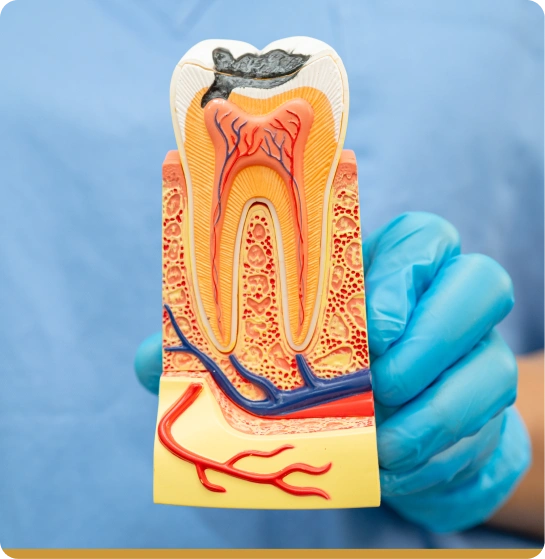
Root canal treatment is used to save your natural tooth when the soft tissue inside your tooth, known as the pulp, becomes infected or inflamed. This can happen because of deep decay, a crack or injury to the tooth. Root canal treatment in Harpley involves:
Left untreated, the infection can spread and lead to further pain, an abscess or even the loss of the tooth. So, the sooner we can take a look, the better.
And if the thought of treatment has you feeling a little uneasy, we understand. Your comfort and peace of mind come first. We’ll explain what’s happening, take things at your pace and do everything we can to make your root canal treatment as comfortable as possible.
Sometimes the throbbing pain is hard to miss. Other times, infection can be quietly developing without causing too much trouble at all. Signs to look out for include:
Your root canal procedure, step by step.


Once everything is thoroughly cleaned, we’ll fill the root canals with a special material and seal the tooth. This keeps bacteria out and helps prevent the tooth from becoming infected again.

If the words ‘root canal’ make you feel a little uneasy, you’re certainly not alone. Thankfully, modern dentistry has come a long way, making root canal treatment more comfortable than you might think. Let’s sort out what’s true, what’s not and hopefully put your mind a little more at ease.
REALITY: The pain that brings you to us is usually coming from the inflamed or infected tooth. Root canal treatment can help address the cause of that pain. We’ll use local anaesthetic to keep you comfortable and check in with you throughout treatment.
REALITY: Sometimes a tooth can’t be saved and extraction is necessary. But when we can predictably keep your natural tooth, that’s generally what we’ll aim to do. Root canal treatment allows us to treat the infection while keeping the tooth in place.
REALITY: Unfortunately, not always. Pain can sometimes ease when the nerve inside a tooth dies, even though infection is still present. That’s why a tooth that’s been causing trouble is worth getting checked, even if it suddenly settles down.
REALITY: Not necessarily. The number and length of appointments will depend on the tooth and complexity of treatment. Once we’ve assessed yours, we’ll explain what’s involved and give you a clearer idea of what to expect.










We offer a range of payment options to help make dental care more accessible for you and your family.
Root canal treatment cost varies depending on which tooth needs treating, how complex the infection is and whether you’ll need a filling or crown afterwards.
Once we’ve taken a good look, we’ll explain what treatment your tooth needs and give you a clear breakdown of the costs before we begin. No surprises, and plenty of opportunity to ask questions.
This is usually the first thing people want to know, and we understand why. Before treatment begins, we’ll use local anaesthetic to numb the area and help keep you comfortable.
You may have some tenderness after treatment, but we’ll explain what to expect and how to look after your tooth at home. And remember, if you need us to pause at any point during your appointment, just pop your hand up.
It depends on the tooth and how complex the problem is. Some teeth have more root canals than others, and the extent of infection can also affect how much treatment is needed.
Your root canal dentist in Werribee will explain what’s involved in your particular case, including how many appointments you’re likely to need to restore the tooth.
Root canal treatment, also known as endodontic treatment, is a well-established dental procedure used to remove infected or inflamed pulp from inside a tooth.
If something you’ve heard or come across has left you concerned, please ask us about it. We’ll take the time to discuss your concerns, what the treatment involves and any additional support you may need to feel comfortable during your visit.
Not necessarily. Whether you need a crown will depend on which tooth has been treated, how much healthy tooth structure remains and how much protection the tooth needs afterwards.
If we recommend a crown, we’ll explain why and talk you through your options. If a filling is appropriate instead, we’ll explain that too.
There’s no set lifespan. How long your tooth lasts can depend on its condition before treatment, how it’s restored afterwards, your bite, oral hygiene and how well it’s looked after over time.
Regular check-ups are important too, as they give us a chance to keep an eye on the treated tooth along with the rest of your oral health.
Sometimes extraction is the most appropriate option, particularly if a tooth is too badly damaged to be predictably restored. But if your natural tooth can be saved, we’ll always consider whether root canal treatment is a suitable way to keep it.
We’ll show you what’s happening with the tooth and talk through the pros and considerations of your options before you decide what you’d like to do.
Severe or persistent toothache, swelling, pain when biting or a pimple on the gum can all be signs that a tooth needs prompt attention. But they don’t automatically mean you need a root canal.
If you’re searching ‘emergency root canal near me’, we’re open seven days. Call us on 03 7057 8350. We’ll assess what’s causing the trouble and let you know what needs to happen next.